If your Maryland property was sold at a tax sale, you may still have the legal right to reclaim it. Under Maryland law, owners can generally redeem the property by paying delinquent property taxes, interest (typically up to 20% annually, depending on county rules), penalties, and approved costs before the court enters a final foreclosure judgment. Acting early gives you the best chance to protect your ownership rights.
What Is the Maryland Tax Sale Redemption Process?
The Maryland tax sale redemption process is the legal procedure that allows a property owner to recover ownership rights after the property has been sold because of unpaid property taxes.
When taxes remain unpaid, the county generally sells a tax sale certificate, not the property itself. The purchaser receives the right to collect the debt and may eventually seek ownership if the property is not redeemed within the legal timeframe.
This gives property owners a second opportunity to protect their investment before ownership changes permanently.
Who Can Redeem a Property?
Redemption is not limited to only the property owner.
Depending on the circumstances, redemption may also be available to:
- Property owners
- Mortgage lenders
- Heirs or legal representatives
- Individuals with a legal interest in the property
- Certain lienholders
If you’re unsure whether you qualify, contacting the county tax office or a qualified real estate attorney can help clarify your rights.
Step-by-Step Maryland Tax Sale Redemption Process
Understanding each step makes the process much less stressful.
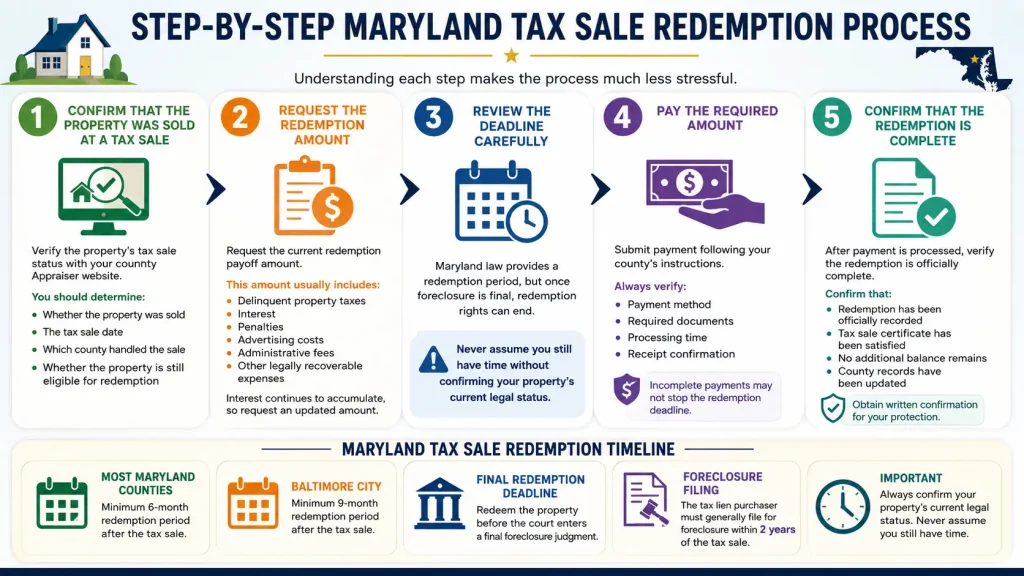
Step 1: Confirm That the Property Was Sold at a Tax Sale
The first step is verifying the property’s tax sale status with your county Appraiser website.
You should determine:
- Whether the property was sold
- The tax sale date
- Which county handled the sale
- Whether the property is still eligible for redemption
Each Maryland county maintains records for tax sale properties.
Step 2: Request the Redemption Amount
Next, request the current redemption payoff amount.
This amount usually includes:
- Delinquent property taxes
- Interest
- Penalties
- Advertising costs
- Administrative fees
- Other legally recoverable expenses
Because interest continues to accumulate, requesting an updated payoff amount is important before making payment.
Step 3: Review the Deadline Carefully
One of the biggest mistakes property owners make is assuming they have unlimited time.
Maryland law provides a redemption period, but once the purchaser begins foreclosure proceedings and the court issues a final judgment, redemption rights can end.
Maryland Tax Sale Redemption Timeline
| Timeline | Details |
|---|---|
| Most Maryland Counties | Minimum 6-month redemption period after the tax sale. |
| Baltimore City | Minimum 9-month redemption period after the tax sale. |
| Final Redemption Deadline | Redeem the property before the court enters a final foreclosure judgment. |
| Foreclosure Filing | The tax lien purchaser must generally file for foreclosure within 2 years of the tax sale. |
Never assume you still have time without confirming your property’s current legal status.
Step 4: Pay the Required Amount
Once you know the exact payoff amount, submit payment following your county’s instructions always verify the official website please avoide to sending payment with private source.
Incomplete payments may not stop the redemption deadline.
Always verify:
- Payment method
- Required documents
- Processing time
- Receipt confirmation
Keeping copies of every payment and document is essential.
Step 5: Confirm That the Redemption Is Complete
Making payment isn’t always the final step.
After payment is processed, verify that:
- The redemption has officially been recorded.
- The tax sale certificate has been satisfied.
- No additional balance remains.
- County records have been updated.
Obtaining written confirmation provides valuable protection if questions arise later.
What Costs Are Included in the Redemption Amount?
Redeeming a property after a Maryland tax sale involves more than simply paying overdue property taxes. The final redemption amount is calculated based on the outstanding tax balance, accrued charges, and certain costs permitted under Maryland law. The exact total varies by county and the stage of the redemption process.
| Cost | What It Covers |
|---|---|
| Delinquent Property Taxes | All unpaid real property taxes that resulted in the tax sale. |
| Accrued Interest | Interest charged on the unpaid taxes at the rate established by the county (up to 20% annually under Maryland law). |
| Late Penalties | Additional penalties applied to overdue property tax payments, where applicable. |
| Tax Sale Advertising Costs | Expenses incurred by the county to publish and advertise the tax sale. |
| Administrative Fees | Processing and administrative charges associated with the tax sale and redemption. |
| Subsequent Taxes Paid | Property taxes paid by the tax sale certificate holder after the sale that are legally recoverable. |
| Legal Costs (When Applicable) | Certain attorney’s fees and court costs may be included if foreclosure proceedings have begun, as permitted by Maryland law. |
Tip: Always request an official redemption payoff statement from the county before making payment. Interest and recoverable costs continue to accrue over time, so the amount due can change until the property is fully redeemed.
What Happens If You Miss the Redemption Deadline?
Missing the redemption deadline can have serious consequences.
If redemption is not completed before the legal process finishes:
- The purchaser may continue foreclosure proceedings.
- Ownership rights may be permanently terminated.
- You may lose the property entirely.
- Recovering the property afterward is often impossible.
This is why acting early is almost always the safest approach.
Common Mistakes That Delay Redemption
Many redemption problems happen because owners wait too long or misunderstand the process.
Avoid these common mistakes:
- Ignoring tax sale notices
- Assuming the property is already lost
- Waiting until the last minute
- Paying an outdated payoff amount
- Forgetting to include required fees
- Failing to keep payment records
- Not confirming that redemption has been officially completed
Avoiding these mistakes can save significant time, money, and stress.
How Long Does the Maryland Tax Sale Redemption Process Take?
There is no single timeline for every property.
The process depends on factors such as:
- County processing times
- Payment timing
- Outstanding fees
- Whether foreclosure proceedings have started
- Document verification
Owners who begin the process early generally experience fewer complications than those who wait until deadlines approach.
Frequently Asked Questions
Can I redeem my property after a Maryland tax sale?
Yes. In many cases, eligible property owners can redeem the property by paying the required redemption amount before their legal redemption rights expire.
Does buying a tax sale certificate immediately transfer ownership?
No. Purchasing a tax sale certificate does not immediately transfer ownership of the property. The certificate holder must follow Maryland’s legal process before ownership can change.
Can someone else pay the redemption amount?
Depending on the circumstances, a lender, heir, legal representative, or another person with a legal interest may be able to redeem the property.
What happens after redemption?
Once redemption is properly completed, the tax sale certificate is satisfied, and the purchaser can no longer obtain ownership through that certificate.
Can I negotiate the redemption amount?
Generally, redemption amounts are determined by law and include taxes, interest, penalties, and other authorized costs. They are not typically negotiated.