Maryland property assessment process is a state-managed system used to determine the fair market value of real estate for taxation purposes. It is conducted by the Maryland State Department of Assessments and Taxation every three years on a rotating cycle. The process is applied uniformly across all counties, ensuring consistency, although local tax rates may vary. The last full reassessment was completed in 2023, and the next statewide cycle is expected in 2026.

How Property Value Is Determined
Maryland property assessments calculate fair market value using a combination of real estate data and valuation techniques. The goal is to ensure each property is assessed as close as possible to its actual market worth. SDAT considers location, condition, and recent market activity while applying standardized methods across all counties for fairness and consistency.
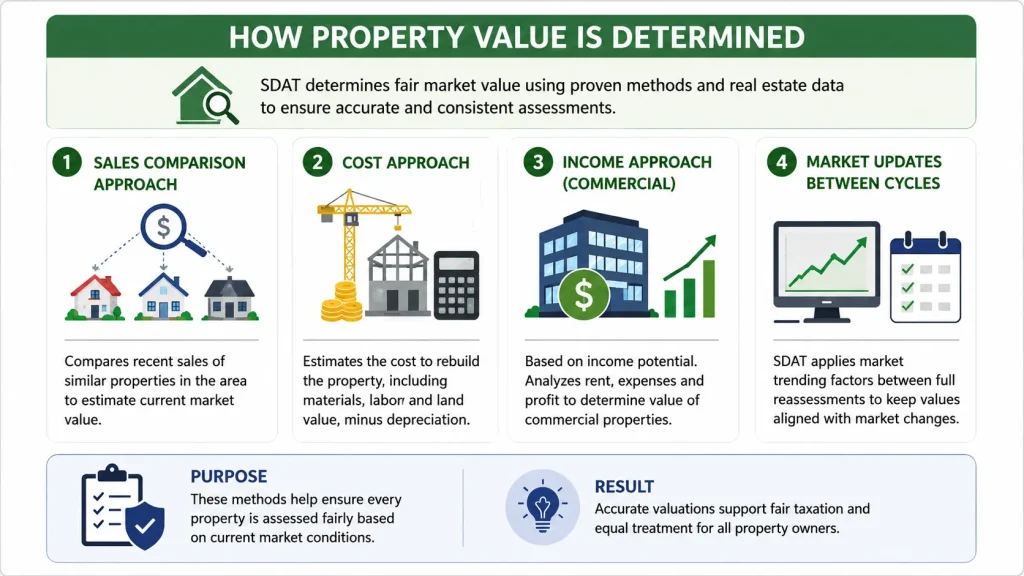
Sales Comparison Approach
This method evaluates a property by comparing it with recently sold similar homes in the same area. Factors like size, location, condition, and features are analyzed to estimate a realistic market value. It is one of the most commonly used approaches because it reflects current buyer behavior and real estate market trends.
Cost Approach
The cost approach estimates how much it would take to rebuild the property from scratch today. It includes the cost of construction materials, labor, and land value, while also considering depreciation. This method is especially useful for newer properties or unique structures where comparable sales data may be limited.
Income Approach (Commercial Properties)
For commercial or rental properties, value is determined based on the income they generate. SDAT analyzes rental income, operating expenses, and profit potential to estimate market value. This approach ensures that investment properties are assessed according to their earning capacity rather than just physical structure.
Market Updates Between Cycles
Between full reassessments, Maryland may apply market trending factors to adjust property values. These adjustments reflect changes in the real estate market, such as rising or falling home prices. This ensures that assessed values remain aligned with current market conditions even in years when a full revaluation is not conducted.
Tax Relief and Protections
Maryland provides several relief programs to protect homeowners from sudden increases in property taxes. These programs are designed to make housing more affordable and ensure long-term residents are not heavily impacted by rising market values. Eligibility and benefits depend on income level and whether the property is a primary residence.
Homestead Tax Credit
The Homestead Tax Credit limits how much a property’s taxable assessment can increase each year for a primary residence. In most cases, the increase is capped so homeowners are not affected by sudden market spikes. To receive this benefit, property owners must apply and confirm that the home is their principal residence.
Homeowners’ Tax Credit
This program provides direct property tax relief to eligible residents based on household income. It helps reduce the overall tax burden for low and moderate-income families, regardless of age. The credit is calculated using income thresholds defined by the state, making it an important support system for qualifying homeowners.
Property Assessment Appeals Process
If a property owner disagrees with their assessed value, Maryland offers a structured appeals system. The process allows homeowners to present evidence such as comparable sales or property condition issues. Appeals must usually be filed within 45 days of receiving the assessment notice.
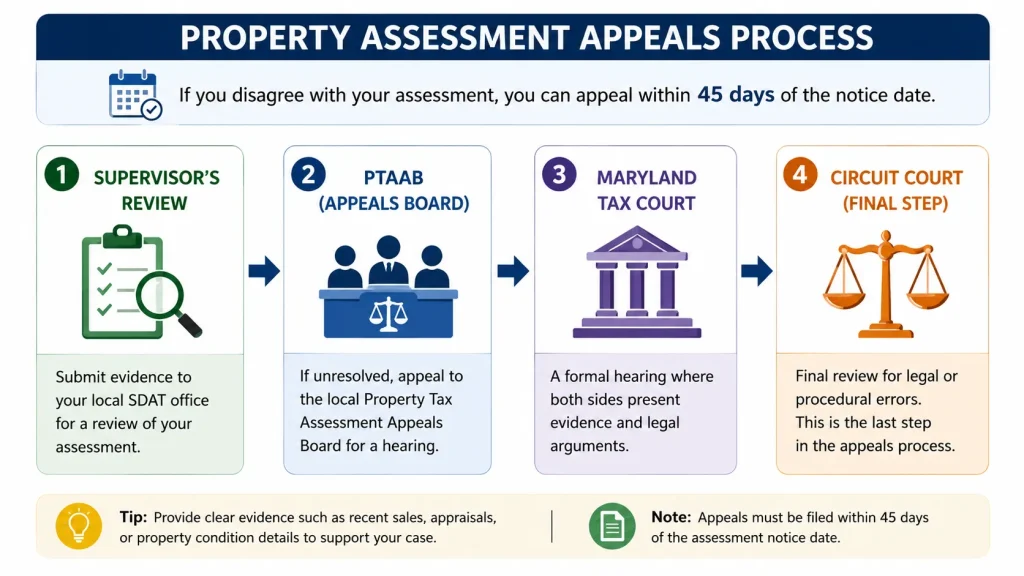
Supervisor’s Review
The first step in the appeals process is a review by the local SDAT office. Property owners submit supporting documents like recent sales data or repair conditions to justify a lower valuation. The supervisor evaluates the evidence and may adjust the assessment if valid concerns are found.
Property Tax Assessment Appeals Board (PTAAB)
If the issue is not resolved at the first level, the case can be taken to the PTAAB. This independent board reviews both sides of the argument and makes a formal decision. It provides a fair and structured hearing process outside the initial assessment office.
Maryland Tax Court and Circuit Court
For further appeals, property owners can approach the Maryland Tax Court, where legal arguments and evidence are formally reviewed. If necessary, the final stage is the Circuit Court, which checks for legal or procedural errors in earlier decisions. This ensures a complete legal pathway for dispute resolution.
Conclusion
Maryland property assessment system is a structured and fair process that ensures real estate is valued based on current market conditions. Managed by the state authority, it follows a triennial cycle, applies standardized valuation methods, and includes tax relief programs along with a clear appeals system. This combination helps maintain transparency, consistency, and fairness for property owners across all counties.
FAQs
1. Can property assessments change between the 3-year cycle?
Yes, in some cases Maryland may apply market trending adjustments between full reassessments. These updates reflect changes in real estate prices to keep property values closer to current market conditions.
2. Do rental properties qualify for Homestead Tax Credit?
No, the Homestead Tax Credit is only available for primary residences. Investment or rental properties are not eligible for this benefit.
3. What happens if I miss the 45-day appeal deadline?
If you miss the deadline, you may lose the right to challenge that year’s assessment. In rare cases, late appeals may be considered, but approval is not guaranteed.
4. Is property assessment the same as property tax calculation?
No, assessment determines the property’s value, while tax calculation is done later by applying local tax rates to that assessed value.
5. Can improvements to my home increase my assessment?
Yes, major improvements like additions, renovations, or structural upgrades can increase your property’s assessed value because they raise the overall market worth.
6. Are all Maryland counties assessed at the same time?
No, Maryland uses a rotating system where properties are divided into groups, and each group is reassessed in different years to ensure an even statewide process.