If you have received a Maryland property tax bill for the first time, or you noticed a higher amount than expected, understanding every section of the bill can help you avoid payment mistakes, late fees, and unnecessary confusion. Many homeowners only look at the total amount due, but the bill contains important details about how the tax was calculated, who receives the money, available credits, and when payments must be made.
What Is a Maryland Property Tax Bill?
A Maryland property tax bill is the official statement that shows how much property tax is owed for a specific tax year. It is issued by the local county or city based on the property’s assessed value and the tax rates that apply to that location.
The bill is more than just a payment notice. It serves as a breakdown of:
- The property being taxed
- The assessed value used for taxation
- State and local tax rates
- Special district charges (if applicable)
- Tax credits already applied
- Previous payments or balances
- The remaining amount due
- Payment deadlines
Reviewing these details carefully helps ensure the bill is accurate before payment is made.
Who Receives the Property Tax Bill?
The property tax bill is generally sent to one of the following:
- The current property owner
- The mortgage lender (if taxes are paid through an escrow account)
- Both the owner and lender, depending on the county’s billing process
If your mortgage includes escrow for property taxes, the lender usually pays the bill directly. Even then, reviewing the bill is important to confirm the assessment and tax amounts are correct.
Sections of a Maryland Property Tax Bill Explained
Every county’s bill may look slightly different, but the information included is generally the same.
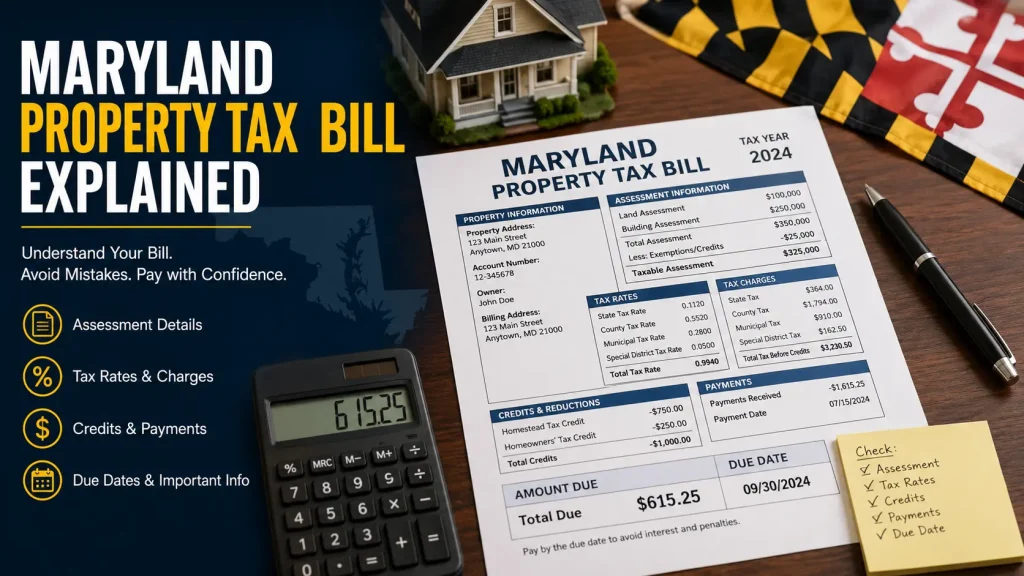
Property Information
This section identifies the property.
Typical information includes:
- Property address
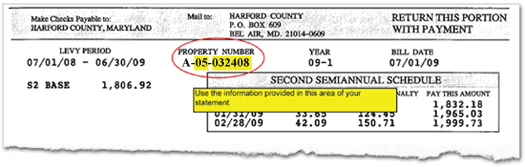
- Account number
- Tax account ID
- Parcel or lot number
- Owner name
- Billing address
The first thing to verify is that all property information matches your records.
Assessment Information
This is one of the most important sections on the bill.
It normally includes:
- Land assessment
- Building assessment
- Total assessed value
- Taxable assessment
The assessed value is determined by Maryland’s assessment process and is not necessarily the same as:
- Market value
- Purchase price
- Current listing price
Your property taxes are calculated using the taxable assessed value shown on the bill.
Tax Rates
The bill lists every tax rate applied to your property.
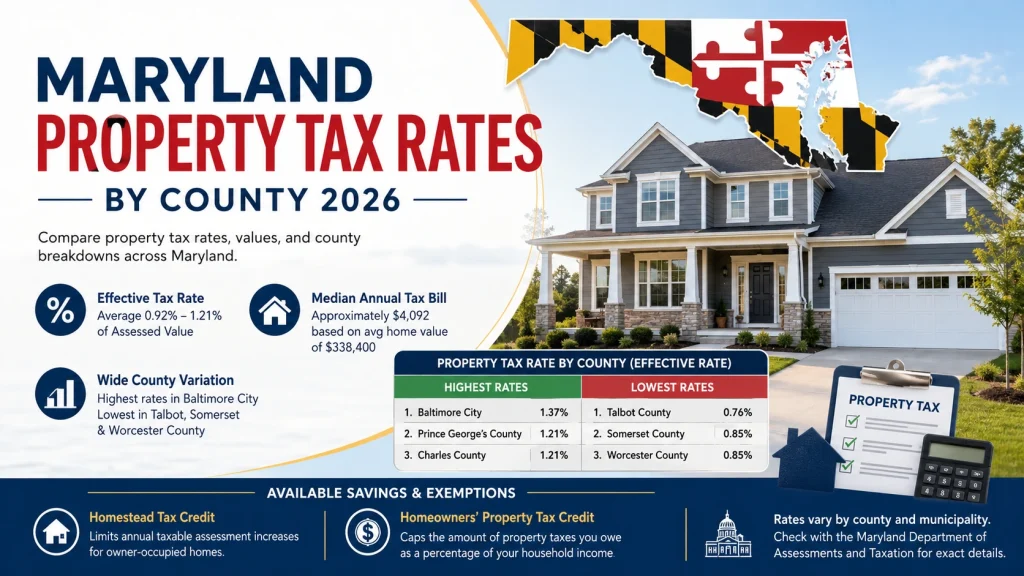
These often include:
- State property tax
- County property tax
- Municipal tax (if applicable)
- Fire district tax
- Special taxing district charges
Each rate applies to the taxable assessment, and together they determine the total tax due.
Tax Charges
This section shows exactly how your total bill was calculated.
You may see separate amounts for:
- State taxes
- County taxes
- City taxes
- Special district taxes
- Local service charges
Instead of showing only one total, the bill separates each taxing authority’s portion.
Credits and Reductions
Many Maryland homeowners qualify for tax credits that reduce the amount owed.
If approved, the bill may list:
- Homestead Tax Credit
- Homeowners’ Tax Credit
- Agricultural credits
- Other county-specific credits
Always confirm that every approved credit appears on your bill. Missing credits can increase the amount you owe.
Previous Payments
If partial payments have already been made, this section shows:
- Amount paid
- Payment date
- Remaining balance
Compare these records with your own payment history.
Outstanding Balance
Near the bottom of the bill, you’ll usually find:
- Total taxes due
- Credits applied
- Payments received
- Remaining balance
This is the amount that must be paid before the deadline to avoid penalties.
Due Dates
The bill clearly states when payment must be received.
Do not assume the mailing date is the payment deadline.
Late payments may result in:
- Interest charges
- Penalties
- Collection action under local tax procedures
Paying before the due date helps avoid unnecessary costs.
How Is the Total Property Tax Calculated?
The total tax amount is generally determined using four components.
- Taxable assessed value
- State tax rate
- County and local tax rates
- Any approved tax credits
The bill combines these items to produce the final amount due.
What Should You Verify Before Paying?
Many homeowners simply pay the amount shown without reviewing the details.
Instead, confirm the following:
- Property address is correct.
- Owner information is accurate.
- Assessed value matches the official assessment.
- Tax rates appear reasonable for your location.
- Approved credits are included.
- Previous payments are recorded correctly.
- No unexpected fees have been added.
- The balance due matches your records.
Finding an error before payment is much easier than correcting it afterward.
Why Might Your Property Tax Bill Increase?
A higher bill does not always mean the tax rate increased.
Common reasons include:
- Higher assessed property value
- Expiration of a tax credit
- New local tax rates
- Special district assessments
- Property improvements affecting assessment
- Correction of previous billing adjustments
Reviewing each section of the bill usually identifies the reason for the increase.
What If Something on the Bill Looks Incorrect?
If you notice incorrect information, do not ignore it.
Examples include:
- Wrong owner name
- Incorrect property address
- Missing tax credit
- Incorrect assessment
- Payment not reflected
- Unexpected charges
Gather supporting documents before contacting the appropriate county office. Keeping copies of previous bills, payment confirmations, and assessment notices can make the issue easier to resolve.
Understanding Escrow and Property Tax Bills
Homeowners with an escrow account often believe they can ignore the tax bill because the lender makes the payment.
However, reviewing the bill remains important because:
- Assessment errors affect future escrow payments.
- Missing tax credits increase your monthly mortgage payment.
- Incorrect tax amounts may create an escrow shortage.
- Billing mistakes are easier to fix before payment is processed.
Even if you do not make the payment yourself, checking the bill each year is a smart practice.
Common Mistakes Homeowners Make
Some of the most common issues include:
- Paying without reviewing the assessment
- Missing the payment deadline
- Assuming the mortgage company handles every situation
- Ignoring missing tax credits
- Overlooking previous payment errors
- Not keeping copies of tax bills
Avoiding these mistakes can save both time and money.
Final Thoughts
A Maryland property tax bill is designed to show exactly how your annual property tax obligation was determined. Taking a few minutes to review the assessment, tax rates, credits, payments, and final balance can help you identify errors before they become expensive problems. Whether you pay the bill yourself or through a mortgage escrow account, understanding each section allows you to make informed decisions and avoid unnecessary surprises throughout the tax year.
Frequently Asked Questions
Does the assessed value equal my home’s market value?
No. The assessed value used for property tax purposes may differ from the property’s current market value or recent sale price.
Why is my property tax bill higher this year?
An increase may result from a higher assessment, changes in local tax rates, the expiration of a tax credit, or additional district charges.
Should I review my bill if my mortgage company pays it?
Yes. Even when taxes are paid through escrow, you should verify the assessment, tax rates, credits, and payment details for accuracy.
Can tax credits appear directly on the bill?
Yes. Approved property tax credits are generally listed as reductions that lower the total amount owed.
What should I do if my payment is missing from the bill?
Compare the bill with your payment records and contact the billing authority as soon as possible if a payment is not reflected.