If you’re buying a home in Maryland or already own a property, it’s important to know whether you qualify for Maryland property tax exemptions before paying more than necessary. Programs like the Maryland Homestead Tax Credit are available statewide, meaning homeowners in every county can apply if they meet the eligibility requirements. Some counties also offer additional local property tax relief programs. This guide explains your options, eligibility, application process, and everything you need to know to reduce your property tax legally.
What Are Maryland Property Tax Exemptions?
Maryland property tax exemptions are tax relief programs designed to reduce the amount of property tax eligible homeowners pay each year. Depending on your situation, you may qualify for a complete exemption, a partial exemption, a tax credit, or a limit on how much your taxable assessment can increase.
Most homeowners qualify through statewide programs administered by the Maryland Department of Assessments and Taxation (SDAT), while some counties and municipalities offer additional local tax relief.
These programs are intended to help homeowners who experience rising property assessments, have limited incomes, are senior citizens, veterans, or meet other eligibility requirements established under Maryland law.
Types of Maryland Property Tax Exemptions
Property tax relief in Maryland generally falls into two categories:
Statewide Property Tax Exemptions
These programs are available throughout Maryland regardless of the county where your home is located. Every eligible homeowner follows the same basic eligibility rules and application process.
Examples include:
- Maryland Homestead Tax Credit
- Homeowners’ Property Tax Credit
- Blind Persons Property Tax Credit
- Disabled Veterans Property Tax Exemptions
- Agricultural Assessment Programs
County-Specific Property Tax Relief
Many Maryland counties provide additional property tax credits beyond the statewide programs.
Examples may include:
- Senior tax credits
- First responder tax relief
- Public safety employee credits
- Historic preservation incentives
- Local rehabilitation tax credits
- Energy-efficient improvement incentives
Each county determines its own eligibility requirements, application deadlines, and available benefits.
Maryland Homestead Tax Credit
The Homestead Tax Credit is one of the most valuable property tax relief programs available to Maryland homeowners.
Instead of reducing your home’s market value, this program limits how much your taxable assessment can increase from one year to the next, helping protect homeowners from sudden increases in property taxes caused by rapidly rising property values.
Who Qualifies?
Generally, you must:
- Own the property
- Live in the home as your principal residence
- Meet Maryland residency requirements
- Successfully apply for the Homestead Tax Credit
Rental properties, vacation homes, and investment properties generally do not qualify.
Benefits
The Homestead Tax Credit helps homeowners by:
- Limiting annual taxable assessment increases
- Keeping future property tax bills more predictable
- Protecting homeowners during rapidly increasing housing markets
How Is the Maryland Homeowners’ Property Tax Credit Calculated?
The Maryland Homeowners’ Property Tax Credit is based on your combined gross household income and the amount of property tax you owe. Instead of paying the full property tax bill, eligible homeowners are only expected to pay up to a certain tax limit based on their income. If your annual property tax exceeds that limit, the difference may be covered through the Homeowners’ Property Tax Credit.
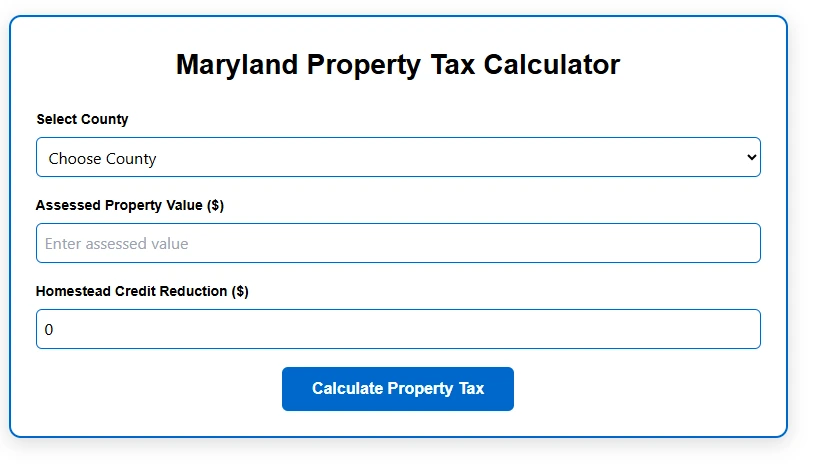
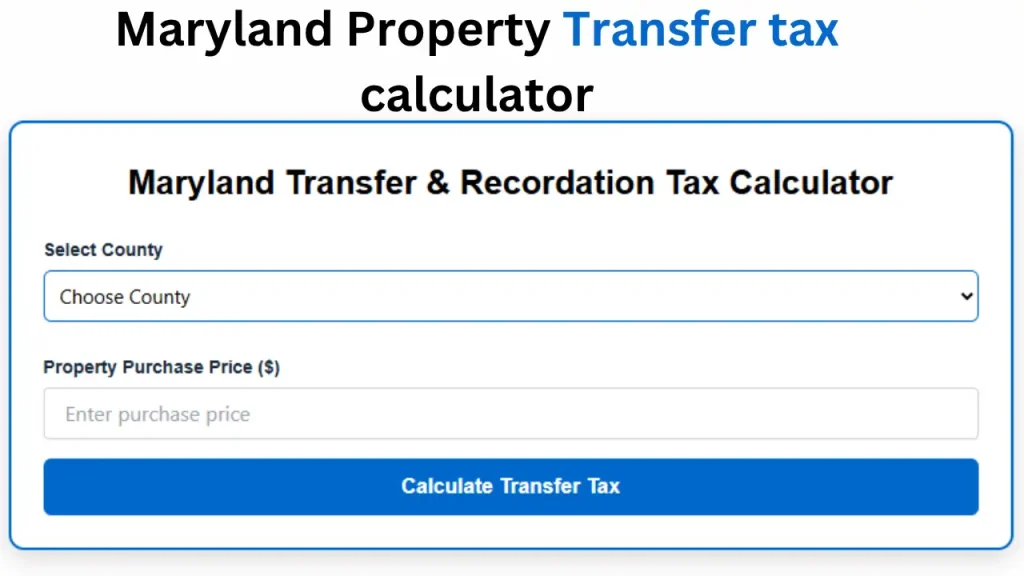
The tax limit is calculated using the following income formula:
- 0% of the first $8,000 of household income
- 4% of the next $4,000 (from $8,001 to $12,000)
- 6.5% of the next $4,000 (from $12,001 to $16,000)
- 9% of all household income above $16,000
To qualify, your combined gross household income cannot exceed $60,000.
2025 Household Income Tax Limits
| Combined Household Income | Maximum Property Tax You Are Expected to Pay |
|---|---|
| $1 – $8,000 | $0 |
| $9,000 | $40 |
| $10,000 | $80 |
| $11,000 | $120 |
| $12,000 | $160 |
| $13,000 | $225 |
| $14,000 | $290 |
| $15,000 | $355 |
| $16,000 | $420 |
| $17,000 | $510 |
| $18,000 | $600 |
| $19,000 | $690 |
| $20,000 | $780 |
| $21,000 | $870 |
| $22,000 | $960 |
| $23,000 | $1,050 |
| $24,000 | $1,140 |
| $25,000 | $1,230 |
| $26,000 | $1,320 |
| $27,000 | $1,410 |
| $28,000 | $1,500 |
| $29,000 | $1,590 |
| $30,000 | $1,680 |
For household incomes above $30,000, add $90 to the tax limit for every additional $1,000 of income, up to the maximum eligible household income of $60,000.
Example Calculation
Suppose your combined household income is $16,000. Based on the table above, your expected property tax contribution is $420. If your actual annual property tax bill is $990, you may qualify for a Homeowners’ Property Tax Credit of $570—the difference between your property tax bill ($990) and your income-based tax limit ($420).
Maryland Homeowners’ Property Tax Credit
The Homeowners’ Property Tax Credit is income-based property tax assistance for homeowners whose property taxes are high compared to their household income.
Unlike the Homestead Tax Credit, this program considers household income, family size, and total property tax liability.
Eligible homeowners may receive significant tax relief depending on their financial circumstances.
Property Tax Relief for Senior Citizens
Many senior homeowners qualify for additional property tax assistance through state or county programs.
Depending on where you live, benefits may include:
- Reduced county property taxes
- Additional tax credits
- Deferred tax payment options
- Special senior homeowner assistance programs
Eligibility requirements vary by county.
Property Tax Exemptions for Disabled Veterans
Maryland provides valuable property tax benefits for qualifying disabled veterans.
Depending on disability status and eligibility, benefits may include:
- Partial property tax exemptions
- Full property tax exemptions
- Surviving spouse benefits in certain situations
Supporting documentation from the appropriate federal agency is generally required.
Agricultural Property Tax Assessment
Agricultural land is often assessed differently from residential property.
Rather than being taxed based on full market value, qualifying agricultural land may receive a reduced agricultural assessment when used primarily for farming purposes.
This helps support Maryland’s farming industry and preserve agricultural land.
Other Property Tax Relief Programs
Depending on your circumstances, you may also qualify for:
- Blind Persons Tax Credit
- Historic Property Tax Credits
- Conservation Easement Programs
- Woodland Assessment Programs
- Renewable Energy Incentives
- Local Municipal Tax Credits
Availability depends on state regulations and local government programs.
Are Property Tax Exemptions the Same in Every Maryland County?
Not entirely.
Statewide programs including the Homestead Tax Credit and several other Maryland property tax relief programs—follow the same eligibility rules across every county.
However, counties can also create additional local property tax credits that are only available within their jurisdiction.
For example, one county may provide extra tax relief for seniors, while another offers incentives for volunteer firefighters or historic property owners.
Before applying, homeowners should review both Maryland statewide programs and any local tax relief offered by their county.
How to Apply for Maryland Property Tax Exemptions
Although the process varies depending on the program, the general steps are straightforward.
Step 1: Determine Your Eligibility
Review the requirements for the exemption or tax credit that best fits your situation.
Step 2: Gather Required Documents
Common documents include:
- Maryland driver’s license or identification
- Property information (Check with Our Database)
- Proof of residency
- Income documentation (if applicable)
- Veteran disability documentation (if applicable)
Step 3: Complete the Application
Submit the appropriate application through the Maryland Department of Assessments and Taxation or your local county office if applying for a county-specific program.

Step 4: Wait for Review
Applications are reviewed by the responsible agency.
If approved, your property tax bill will reflect the applicable credit or exemption.
Common Reasons Applications Are Delayed
Many applications require additional review because homeowners:
- Forget to sign forms
- Submit incomplete information
- Miss application deadlines
- Provide outdated documentation
- Apply for programs they do not qualify for
Carefully reviewing your application before submission can help avoid unnecessary delays.
Tips to Maximize Your Property Tax Savings
To make the most of available property tax relief:
- Apply as soon as you become eligible.
- Keep your mailing address up to date.
- Respond promptly to requests for additional information.
- Review your annual property assessment.
- Check for both statewide and county-specific tax relief programs.
- Reapply if required by the program.
Final Thoughts
Understanding Maryland property tax exemptions can help homeowners lower their annual property tax burden and avoid paying more than necessary. Whether you qualify for the statewide Homestead Tax Credit, the Homeowners’ Property Tax Credit, or additional county-specific relief, taking the time to review your eligibility can result in meaningful long-term savings. Before paying your next property tax bill, explore both Maryland’s statewide programs and your local county’s tax relief options to ensure you’re receiving every benefit available to you.
Frequently Asked Questions
Who qualifies for Maryland property tax exemptions?
Eligibility depends on the specific program. Homeowners may qualify based on residency, property use, household income, age, disability, military service, or other requirements.
Is the Maryland Homestead Tax Credit available statewide?
Yes. Eligible homeowners in every Maryland county can apply for the Homestead Tax Credit.
Do all counties offer the same property tax credits?
No. While statewide programs are consistent across Maryland, counties may provide additional local property tax relief with different eligibility rules.
Can I apply for more than one property tax program?
Yes. Many homeowners qualify for multiple property tax relief programs if they meet each program’s requirements.
Does the Homestead Tax Credit reduce my home’s market value?
No. It limits the increase in your taxable assessment rather than changing your property’s market value.
Do rental properties qualify?
Generally, no. Most homeowner tax relief programs require the property to be your principal residence.
What documents are usually required?
Requirements vary, but applicants commonly need proof of ownership, residency, identification, income information (if applicable), and supporting documentation for specialized programs.
When should I apply?
Apply as soon as you become eligible. Some programs have annual filing deadlines, while others may accept applications throughout the year.
Can seniors receive additional tax relief?
Yes. Many Maryland counties offer extra tax relief programs for qualifying senior homeowners in addition to statewide benefits.
Where can I learn about county-specific property tax exemptions?
Contact your county government or local finance office to learn about property tax credits and exemptions available in your area.